Acting responsibly towards people, society and the environment

Quality isn’t a claim, it’s a system
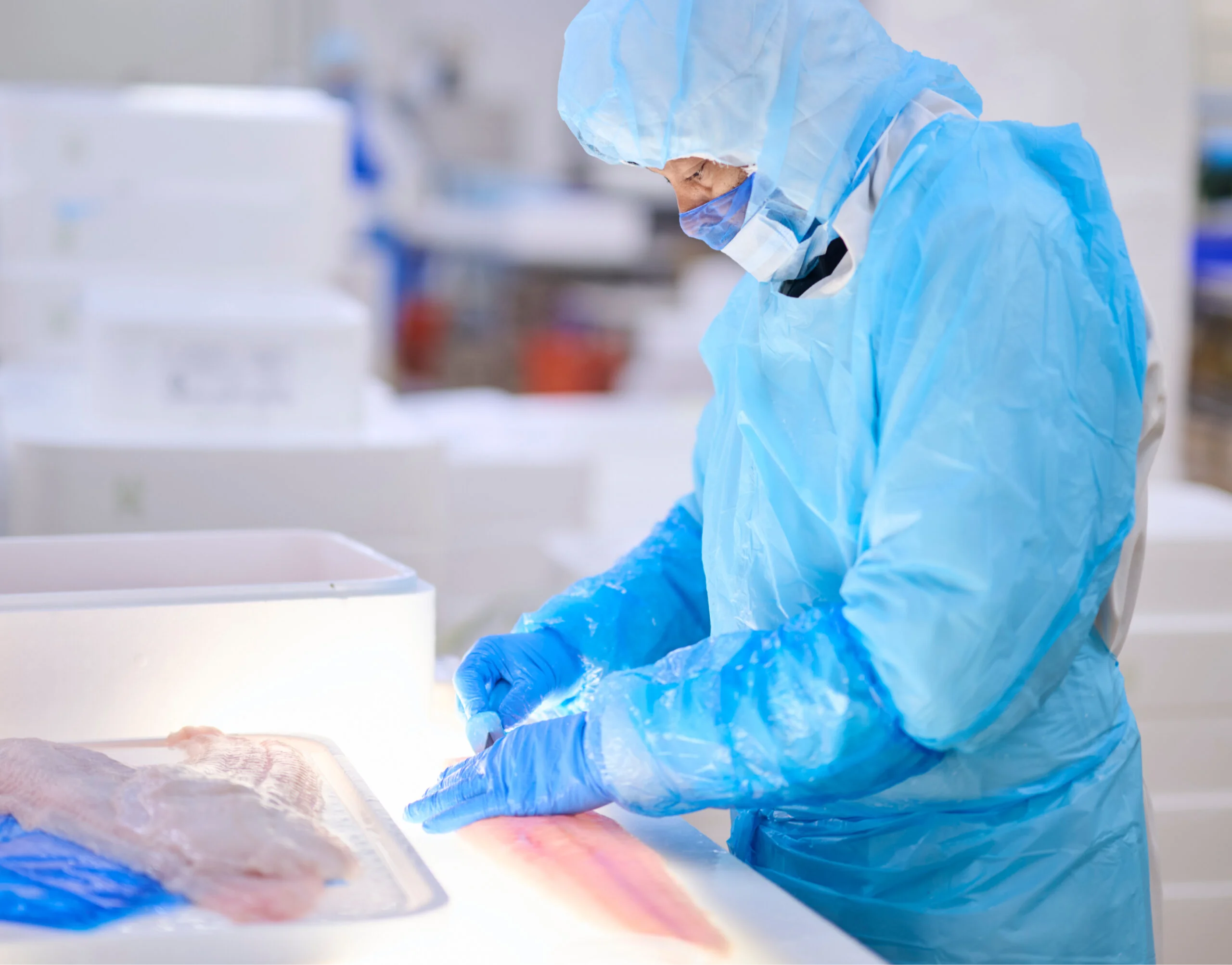
At Gadus, quality is central in every step of the process. Between the fish that’s still swimming and the final product we deliver, everything is strictly managed and independently verified. Traceability, daily checks, certifications and external audits ensure we consistently deliver what we stand for.

OUR VALUE CHAIN
From source to plate: transparency at every step
Sustainability starts with insight. We track our products throughout the entire chain and work with partners who share our standards. Between catch and delivery, every link matters.
fishing vessel / shipowner
Fishers catch wild fish in their natural marine environment. After the catch, the fish is sorted and sold for further processing.
We choose sustainable fishing methods as much as possible. Sustainable wild-caught fish reduces bycatch, respects marine ecosystems and avoids damage to the seabed.
Full traceability from the boat is guaranteed. For MSC-certified fish, sustainable origin is also independently verified.
fish farm
In fish farms, fish are raised in controlled conditions and then transported live or chilled to the factory.
We work with certified aquaculture (ASC, GlobalG.A.P. …), where water quality and fish health are strictly monitored. With transparent information all the way to the factory, attention to animal welfare and controlled growth conditions.
Our goal is a sustainable food product with a lower CO₂ footprint.
Upstream transport
Chilled transport brings the fish – both wild and farmed – safely and at the right temperature to Gadus. We work with reliable transport partners and aim for lower climate impact through combined transport (where possible). Strict temperature control guarantees freshness and full traceability during transport. We aim to optimise CO₂ per kilogram of product: minimising air freight, preferring sea and road transport, and avoiding unnecessary long-distance sourcing.

At Gadus, the fish is received, checked, processed and packaged into ready-to-prepare products tailored to customer needs. Respect for the raw material means maximum yield. Strict quality control and food safety, energy- and water-efficient production with efficient installations and cooling. Transparent processes, from intake to packaging. Certifications such as IFS and MSC/ASC Chain of Custody confirm our approach.
Downstream transport
From Gadus, finished fish products are transported via cooled transportation to distribution centres. Everything runs via own and outsourced transport, optimised routes and the best possible load factor. Continuous temperature monitoring guarantees reliable delivery times and product integrity.
Retail / wholesale / foodservice
Our customers in retail, wholesale and foodservice purchase the fish products, store them chilled and offer them in stores, counters or professional kitchens. We value consistent quality. Clear labelling shows origin, species and certification. We support our customers with shelf management and presentation, provide sustainability information and build partnerships around assortment and innovations.
End consumer
The end consumer buys the fish products, prepares them at home or out of home and thus completes the final step in the value chain. High-quality, fresh, safe and transparent fish products with clear origin information (wild/farmed, certification) are essential here. We make the sustainable choice accessible by focusing on ease of use and inspiring applications. Reliable quality encourages everyday use.
Our challenges
Certificates
MSC
Gadus processes MSC-certified wild fish, giving customers certainty of sustainable fisheries, controlled catches and a traceable chain. In 2025, we were named “Best Belgian Supplier” at the MSC Benelux Awards.


IFS
Gadus is IFS-certified, meaning our entire processing meets strict requirements for food safety, quality and transparent production processes.
ASC
Gadus works with ASC-certified farmed fish, sourced from responsibly managed farms that pay close attention to the environment, water quality and animal welfare.


ILVO
In addition to certificates, we work with ILVO assessments for fish species that aren’t available as MSC-, ASC- or GlobalG.A.P.-certified. This helps us keep making sustainable choices, even for less common species.
BIO
A BIO certificate is an official, controlled recognition that guarantees a product, company or webshop complies with strict European organic regulations, allowing the term ”bio” to be used legally.


Autocontrolegids
A self-checking guide certificate proves that a food business uses an approved internal control system. It is drawn up within the sector and validated by the FASFC. Self-checking systems take hygiene and traceability rules into account, and recognised certification bodies are responsible for audits and issuing the certificate.
Transparency about our impact
In early 2026, we published our first full sustainability report. In it, we show concretely how we work on people, planet and profit in the short, medium and long term.
From our CO₂ reduction plan to our participation in the VOKA Charter for Sustainable Entrepreneurship, from governance to social impact—we fully disclose our approach.
Download the report and discover how we work every day on a more sustainable future for fish.

Want to know more?
We’re happy to tell you more about our approach, our assortment or the possibilities for your business.